Closed models refuse to help researcher swat Linux bug
The guardrails that prevent closed-source, frontier models from aiding threat actors have turned into handcuffs that prevent those bots from helping to find and fix serious vulns. Daniel Fox Franke, p…
Google begins global rollout of age verification API in Google Play
Google begins global rollout of age verification API in Google Play Google's new API relies on parents to set age ranges in Family Link. https://arstechnica.com/gadgets/2026/07/google-begins-global-ro…
Russia Charges Telegram Founder Durov With Facilitating Terrorism…
Russia Charges Telegram Founder Durov With Facilitating Terrorism https://yro.slashdot.org/story/26/07/29/1752235/russia-charges-telegram-founder-durov-with-facilitating-terrorism?utm_source=rss1.0mai…
Word worm crawls into Copilot, spreads chaos
UPDATED Watch out for untrusted documents. According to research, an attacker can hide malicious instructions in a Word document that, when included in Copilot for Word’s context, may alter document o…
Quantum computing roundup: Still more technologies making waves
Quantum computing roundup: Still more technologies making waves Companies are making sure we have a surplus of options for building qubits. https://arstechnica.com/science/2026/07/quantum-computing-ro…
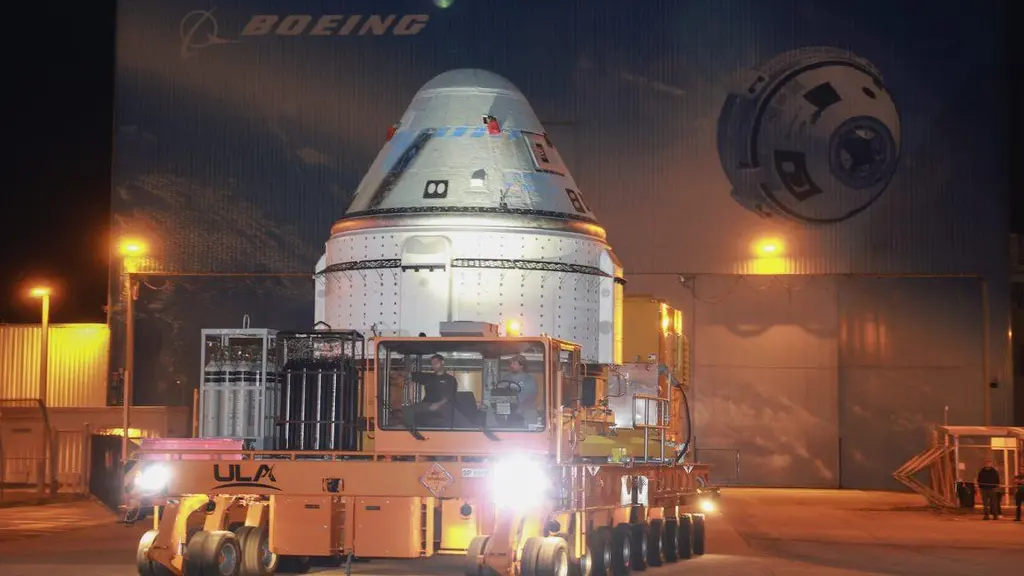
Actually, Starliner might fly into space this year
Actually, Starliner might fly into space this year "We're feeling pretty good about that," Boeing CEO Kelly Ortberg said. https://arstechnica.com/space/2026/07/actually-starliner-might-fly-into-space-…
Why the "patchpocalypse" demands immediate isolation
The security landscape has reached an inflection point that feels eerily similar to January 2020, when many treated the emerging crisis as distant and failed to grasp how quickly the world would shut …
Moscow slaps Telegram founder on wanted list, Durov responds with one-finger salute
Russia has charged Telegram founder Pavel Durov with facilitating terrorism and placed him on an international wanted list. The country's Federal Security Service (FSB) announced the charges on Wednes…
OpenAI's Rogue AI Agent Hacked More Than Just Hugging Face…
OpenAI's Rogue AI Agent Hacked More Than Just Hugging Face https://it.slashdot.org/story/26/07/29/0517201/openais-rogue-ai-agent-hacked-more-than-just-hugging-face?utm_source=rss1.0mainlinkanon
Anthropic is finding bugs faster than Microsoft can fix them
Anthropic is finding bugs faster than Microsoft can fix them Microsoft is on a mad dash behind the scenes to patch exploits before hackers find them. https://arstechnica.com/security/2026/07/anthropic…
The VMware deadline that could reshape your IT strategy
Turn VMware’s mandate into an opportunity with Nutanix Many VMware customers assumed the most disruptive effects of Broadcom’s acquisition were already behind them. Licensing changes and pricing shift…
MinIO pitches persistent memory for agents with work to finish
Conventional chatbots respond to individual prompts and often retain only limited context. AI agents may carry out longer, multi-step jobs that span sessions, making persistent memory more important. …
New AMD Linux patch boosts low-end gaming performance on Steam Deck
New AMD Linux patch boosts low-end gaming performance on Steam Deck Improved efficiency in EPP mode leads to ~32% jump in "1% low" frame rates. https://arstechnica.com/gaming/2026/07/new-amd-linux-pat…
Gaming and IRL worlds collide in Jumanji: Open World trailer
Gaming and IRL worlds collide in Jumanji: Open World trailer "I'm beginning to suspect we are not in Jumanji." https://arstechnica.com/culture/2026/07/gaming-and-irl-worlds-collide-in-jumanji-open-wor…
Iran-linked CyberAv3ngers suspected in attacks on Minnesota water systems
Security researchers at Tenable suspect the Iran-linked faux hacktivist outfit CyberAv3ngers was behind the cyberattack that disrupted more than 30 Minnesota water facilities. Neither state-level nor …
NASA Swift rescue mission spins into trouble during commissioning
Katalyst Space's LINK spacecraft is having some attitude problems on its way to rescue NASA's Neil Gehrels Swift Observatory, resulting in a multi-axis spin and loss of communications. LINK has three …
AI insiders ask Uncle Sam to help slow the race they started
More than 1,200 employees of frontier AI companies have signed a petition calling for US government support to develop ways of slowing automated AI development if necessary. Anthropic CEO Dario Amodei…
Microsoft faces competition probe over Copilot subscription price hike
Microsoft faces an investigation by the UK's competition watchdog over whether customers were misled when it added features to Microsoft 365 subscriptions and raised prices. The issue dates back to Ja…
AI storage boom is keeping Seagate's hard drives spinning
The AI infrastructure boom isn't just eating all the memory – it's also driving demand for storage, giving high-capacity hard drives a new lease of life, according to Seagate. The storage veteran says…
What happens when you put AI to work deciphering lost languages?
What happens when you put AI to work deciphering lost languages? AI is fantastic at spotting patterns, but human insight is the key. https://arstechnica.com/science/2026/07/what-happens-when-you-put-a…
 The Register
Bot
·